
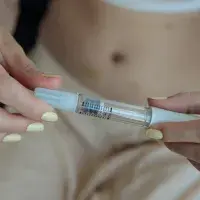
In vitro fertilisation (IVF) is a type of fertility treatment. Ovarian stimulation helps women’s ovaries produce more eggs, which are collected, fertilised and transferred back to the woman. Various hormones, including gonadotropins, are used to stimulate the ovaries:
- purified human menopausal gonadotropin (HMG) and highly purified (HP‐HMG);
- purified follicle‐stimulating hormone (FSH‐P) or highly purified follicle‐stimulating hormone (FSH‐HP);
- recombinant follicle‐stimulating hormone (rFSH) was developed in a laboratory to obtain higher purity of the hormone;
- follitropin delta was developed to work in a more personalised way; and
- 'biosimilars' are manufactured to offer similar results to rFSH at a potentially lower cost.
Ovarian hyperstimulation syndrome (OHSS) is an unwanted and sometimes serious effect of IVF, in which the ovaries swell and fluid can leak into the abdomen.
Cochrane authors wanted to find out which gonadotropin leads to more live births, fewer cases of OHSS, and more clinical pregnancies confirmed by ultrasound.
Key results
- We included 59 studies with a total of 18,119 women undergoing fertility treatment in a clinic.
- Compared with HMG/HP‑HMG, rFSH probably decreases live births and clinical pregnancies, and probably increases OHSS.
- There is probably little to no difference in live births. OHSS, and clinical pregnancies between rFSH and FSH‐HP.
- There is probably little or no difference in live births and clinical pregnancies between rFSH and follitropin delta, but OHSS is probably higher with rFSH.
- Compared with biosimilars, rFSH probably increases live birth and clinical pregnancy rates, with little or no difference in OHSS.
Besides effectiveness and safety, the choice of one or the other product will depend upon the availability of the product, the convenience of its use, and the associated costs.
Read the full review on the Cochrane Library.